About Woolly Wits

I am a hand-knitting designer and teacher. See and purchase my published designs on Ravelry.

Monday, December 16, 2013

Which Sweater is Most Flattering? Another Round . . .

Time for a quick round to determine which of three sweaters is most flattering, and why that's so.  Again, we turn to the Webs catalog.  One of the many reasons I love Webs is that they use models with real bodies so that knitters (or crocheters) can have a better idea of what a sweater might look like on their real body.  Here are the contestants:
565 Bryant Cardigan 570 Big Sky Pullover Penelope Sweater
On the left is the crocheted #565 Bryant Cardigan by Kirsten Hipsky.  On the right is #570 Big Sky Pullover also by Kirsten, and below is The Penelope Sweater from Jade Sapphire.  (Click on the photos for the links.)  Although I love the colors, especially the contrast yellow at the edges, it is clear that the striped sweater is doing our model no favors.  The boxy shape leaves her with no visible waistline and also flattens her bust.  This is not a 'date' sweater.  And a note on the photography . . . see how the model is turned to the side in all the pics?  This is more visually slimming than a full-frontal stance.  But it's especially helpful in reducing the impact of the not-very-flattering wide horizontal stripes.

I like the two other contenders, which works out well, since one is crochet and one is knit.  Why do I like them?  Their fitted shape, cardigan style whose front closure gives a strong vertical design element, v-neck to lengthen the neck and visually narrow the chest (as well as draw focus to the bust).  If I had to choose between the two, Penelope would get my vote.  I think the longer sleeve is more flattering, as it gives another long vertical line.  And, I line the way the lower sweater is flared to give a peplum effect.  The fact that Penelope is knit in cashmere also works in its favor, although a less expensive fiber, such as a sport weight merino, could certainly be substituted.

OK, I just noticed that Penelope's size range is 34" up to 40".  Please . . .   Just on this alone, it has lost my vote, making the winner . . . Bryant!


Friday, December 13, 2013

Coal for Christmas

The deadline for my next published design was pushed back a few weeks, so I was given an opportunity to do a little holiday gift knitting.  The beneficiaries of this are my nieces, who range in age from ten to twenty-three.

The strange thing is, I found a pattern in my knitting.  Everything was gray.  Charcoal gray.  As in, all naughty children get for Christmas is a stocking filled with coal.  I will leave it to their mothers to say whether they have been naughty or nice, but they are getting coal from me.

Brynn's set of hedgehogs were knit from Purl Soho's Knit Hedgehog free pattern. All were made from bits of stash yarn.  The pink was done with multiple strands of baby yarns, while the gray was some Lopi, leftover cowl yarn (more on that coming) and an unlabeled skein.  The pattern was very clear and very fun.  After finishing these three, I immediately cast on another to make a dog toy.

The hat with the row of shiny buttons is the Owl Hat for Big Heads by Linnea Delen, another free pattern. Maggie loved the owl mitts I made her from Mollie Makes last winter, so a hat to match seemed natural.  I did change up the pattern by working the ribbing on a needle two sizes smaller, as it appeared a little floppy in the pattern photos. That was a good decision, as even if the hat is a little large, the firmer rib will hold it on.  The yarn is a skein of Berroco Vintage Chunky that was in the stash.

Rachel's gift is a GAP-tastic cowl from Jen Geigley's super-popular pattern.  I was working on this for a while, because it served as my mindless knitting project when I needed a break from my own design work.  The yarn is an Italian boucle merino while I recycled from a thrift store.  I will usually only go to the effort of picking apart a sweater and ripping it all back for cashmere, but I really liked this yarn.  I used three strands held together to match the pattern gauge.  Many knitters I know have made shorter than the 15" called for in the pattern, but I really like the huge scale of the original, especially for a hip young thing.

The last present is for Ellie.  At least I think it is, because I like them so much I may keep them and knit her another pair.  They are simple but elegant, and a quick knit - the Nejiri wrist warmers by Yumiko Sakurai.  It's a nicely written pattern, but I did add a few tricks.  Before binding off for the thumb, I worked a kf&b on the last stitch, and then bound off the new back stitch over the first true bound off stitch.  This is more secure and stronger, since three strands of yarn are now bearing the stress of the opening.  When closing the thumb opening on the next row, I did another kf&b and bound off the new stitch over the first stitch across the gap for the same reasons.  The yarn is very vintage - BioSpun Wool from Creative.  The dye ran like crazy when I washed them to block, so I am veyr happy that I did not use it for color work.  It's a heavy dk weight, so I used two strands.  And, since I liked them so much, it's a good thing I have plenty more for a couple more sets.

So that leaves one more set of mitts, and one (possibly two) hedgehog dog toys to finish my holiday knitting.  Seems easy, except that the second set of mitts should be in the mail by Monday . . . .

Tuesday, December 10, 2013

Woolly-Wits Reviews Twist Collective Winter 2013

It's another lovely collection from the Twist Collective.  But, I do have an overall complaint.  The majority of sweaters in this collection are knit of yarn that is worsted weight, or thicker.  While we already know that bulky yarn is not a friend to a person of size, I also question its seasonal appropriateness.  Yes, in winter it is colder.  But, as I move through my day, I am going through variable heating zones.  As any Scout will tell you, this requires layers.
And, to me, a worsted weight sweater is just too warm for most indoor wear.  (Although out beloved cardigan does allow more climate control than a pullover.)  I would prefer to see worsted weight sweaters in a fall collection where they can be worm more like a jacket.  So, here in the smaller photos are the sweaters with a flattering shape and design lines, but are knit in a gauge of 18 stitches over 4" or heavier.  Some of them I like enough to consider substituting a lighter weight yarn and working a larger size to compensate, but that does throw off row gauge and complex cable patterning.


There are a few designs in dk or lighter yarns which get a 'thumbs up' from me.  The first is Keynote by Wencke Lucas.   It's a scoop neck  cardigan in a dk weight yarn with delicate cable work in vertical panels alongside the button band.  This is all very good.  The cable bands also appear along the side seams.  This is an interesting detail, but, because it draws attention to the width of the body, not so flattering.  But, it is subtle enough that I am willing to give it a pass.


The next cardigan is Sablier by Nell Ziroli.  Again we have vertical panels of cable work, but I really like the way they move in and out diagonally. Lately I find myself very drawn to longer cardigans with low pockets.  This works well for my body type (more weight carried through chest) than for those with concerns for their hips and thighs, as the pockets add additional bulk.  One way to reduce bulk is to work the pocket lining in a lighter weight yarn of a matching color, or even cut it out of fabric.  A knit jersey fabric is best for this, as it will have stretch, just like the sweater.

I am so tempted to cast on a sweater project, but I am trying to sneak in a few knitted gifts before I am back to work on my next project with a deadline.  I'll snap some pics of those to slip into a post.

Thursday, December 5, 2013

Woolly-Wits Reviews Knitty Winter 2013


I know that yesterday I promised you reviews of the new issues of Knitter's and Twist Collective.  But then, the new issue winter issue of Knitty popped up overnight, so I am bumping the other two.

By the way, have you discovered the work-around to Knitty immediately after new issues are up-loaded? For a loooong while, I would not even bother to check out a new issue for days because the site ran so slow, if you could get on  at all.  But, it looks like they are now posting the patterns to Ravelry even before sending out the official e-mail announcing the availability of the newest issue.  So, if all you are really interested in is seeing the new free patterns (aren't we all?), then just go to Rav and search on the issue name. 

That's the good news.  The bad news is that this issue is overloaded with dense cable-work designs.  While they may be traditional and beautiful, and a true display of knitting skill, they are not flattering to those of us with an excess of flesh through our torsos.  The heavy stitch work creates a dimensionality that adds visual weight.  Great for skinny folk, but no so much for the rest of us.  But, there are a couple designs for us.

The first is Armande by Andi Satterlund.  It's a lot of stockinette stitch, but it's a classic style that you'll wear forever.  The low pockets are great for those of us who carry our weight through the chest, but if you carry yours lower, you would probably want to eliminate them and/or shorten the sweater a couple inches.  Please do be careful about fit, though.  If you look closely you'll see the gaps in the button band at the bust and hips.  Since this is such a straightforward knit, there's no excuse for not putting in the shaping for an excellent fit to your body.

The other design that works for fuller figures is Galanthus by Rachel Henry.  It's knit with fingering weight yarn, but on a larger needle for openness in the lace and good drape.  The scoop neckline is good for drawing focus to the face and neck, which balances the lacework lower on the sweater.  The style is a little too feminine for me, especially the volume in the sleeves.  But, I would definitely consider tweaking the pattern to bring the sleeves in for a closer fit, as well as lengthening them to the wrist.  Or, maybe shortening a tinge to 3/4 length.  

That's it for the sweaters, but I have to give a mention to Franklin Habit's plaid cowl.  I do love a plaid, and this is an interesting variation in technique from what I've been doing lately.  

Wednesday, December 4, 2013

Not Really a Vacation


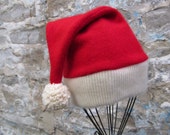
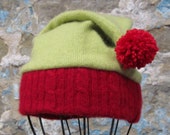
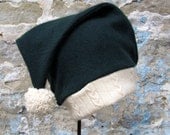
Up-cycled Cashmere Santa Hat for BabyI've had a little break from posting while I got my seasonal Etsy shop, La Bella Capra, up and running.


Up-cycled Cashmere Santa’s Helper Elf Hat for BabiesUp-cycled Cashmere Santa’s Helper Elf Hat for Adults


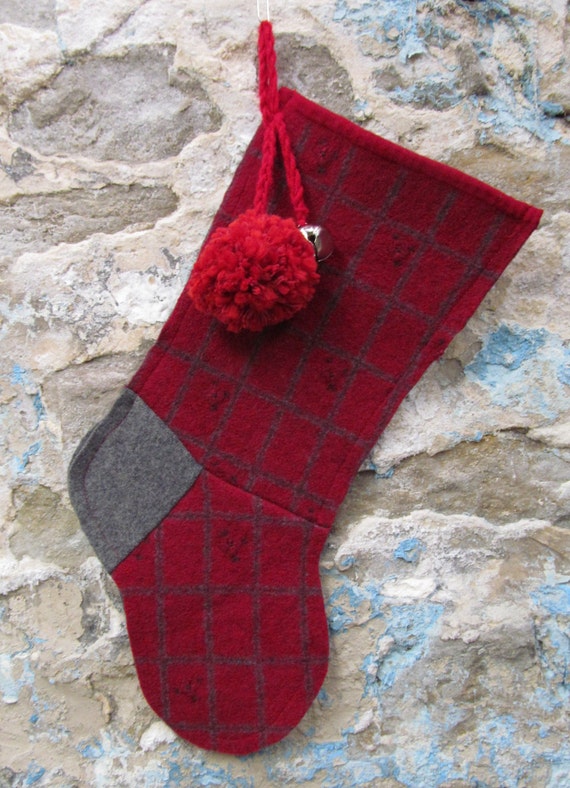
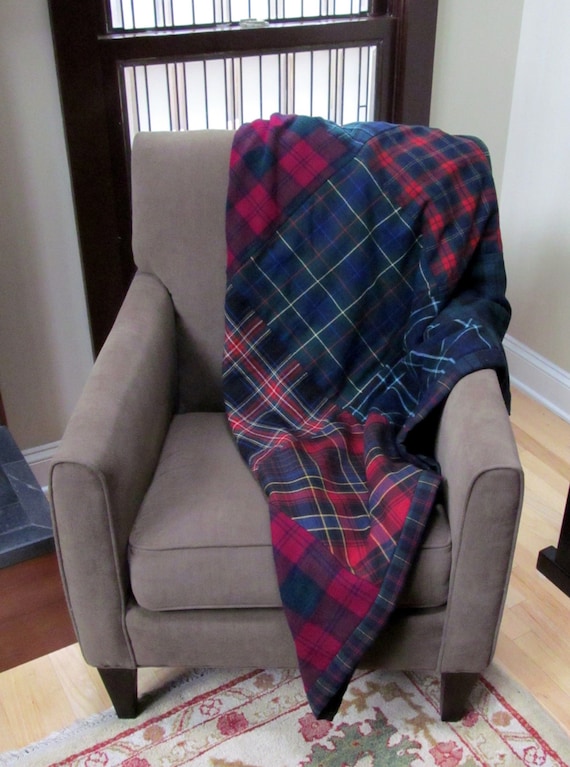
A friend and I have a shop offering items which we have been up-cycled from cashmere and wool sweaters.  This year we added wool plaid items to the mix.  Can you tell I'm a little bit plaid obsessed?


Red and Gray Plaid with Embroidered Flowers Upcycled Felted Wool Christmas StockingUp-cycled Plaid Patchwork Throw


I'll be back with some reviews, since the new issue of Knitter's hit my mailbox and the new issue of Twist Collective hit my electronic in-box.

Tuesday, November 19, 2013

Woolly-Wits Reviews Interweave Knits Winter 2014


This Winter 2014 issue of Interweave Knits is the first for which the new editor, Lisa Shroyer, owned the entire process, from submitting the call for designs, to project selection, to photography, to layout, and all the way to publication.  And, it shows.  As a collection, I think this is the most wearable I've seen from IK for a very long time.  Of course, it still have too many crew neck pullovers for my taste, but at least the ones presented are modern interpretations of classic knits.  And, the skinny girls need sweater options, too.

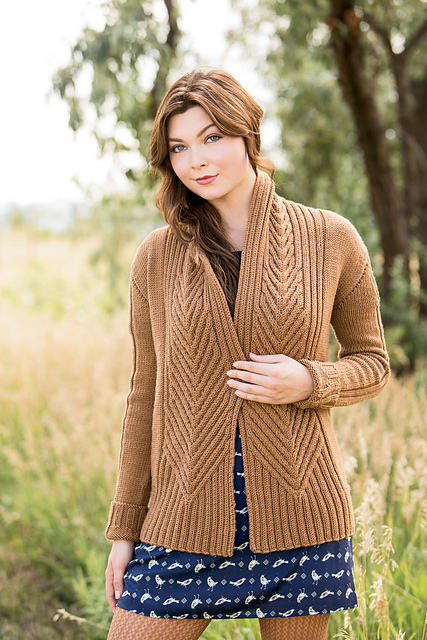
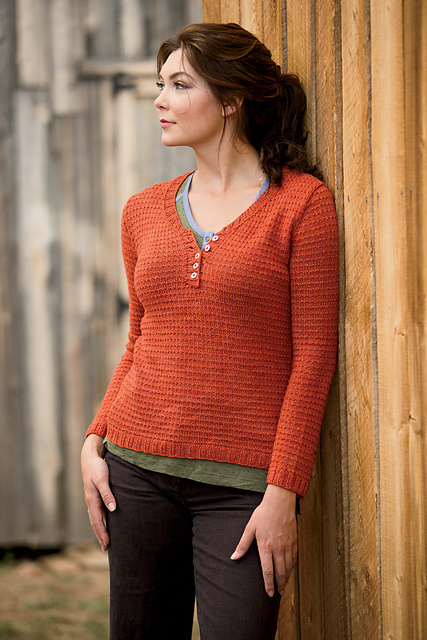
I am going to begin with what I think is the standout of the issue, L'Acadie Cardigan designed by Bristol Ivy.  To me, this should have been the cover design.  I suspect that it is not because the color is underwhelming.  (The orange Henley on the cover is much more eye-catching.)  

I love how the design gets more interesting the longer you look at it.  The chevron rib pattern is actually cabled down the center.  And, it narrows as it moves up to the shoulder, with increasing numbers of vertical ribs as the transition to the stockinette stitch.  The combination of vertical and diagonal lines, as well as the very strong vertical line created by the center front opening.  While there is a lot of texture, and a larger stitch gauge, that is balanced by the stockinette stitch background.  

What doesn't thrill me is the modified drop sleeve.  It is creating a line which cuts across the upper arm.  This is not a design detail for those of us with chubby upper arms.  My solution would be to substitute a set-in sleeve, as this would not appear to impact the stitch patterning.  (Of course I could never knit a sweater pattern as written . . . .)


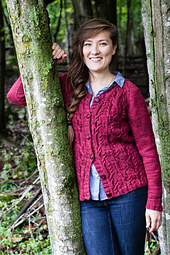
The State Fair Cardigan by Heather Zoppetti (shown in purple at right) is another highly textured cardigan.  The cable are in very high relief, so this is one to be careful of if you are large busted.  But, as in the L'Acadie Cardigan, it has very strong vertical lines accented with the diagonal lines of the stitch pattern.


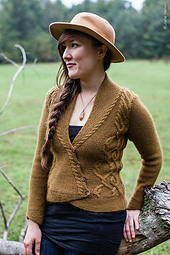
Another design with strong verticals and interesting stitch patterning is the Cerrito Caridgan by Faine Goberstein (shown in beige at left).  It's a combination of the vertical cable and diagonal herringbone stitches.  The longer length is good for camouflaging wider hips and thighs.  


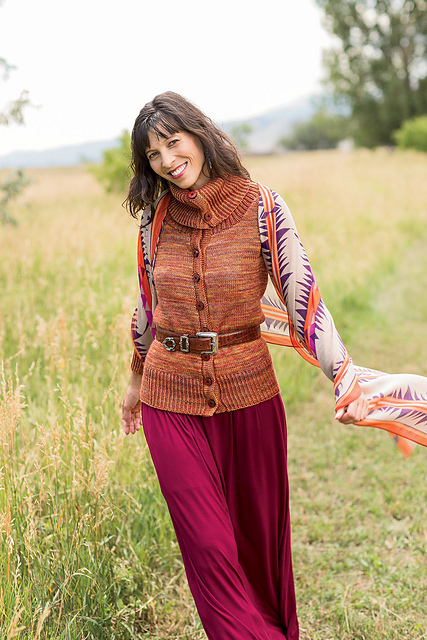
Cynthia's Cardigan by Andrea Sanchez (shown at right in variegated orange) is a good design for ladies who carry their weight through the hips and thighs because the volume of the collar provides a visual balance.  (But don't wear this sweater with the collar buttoned up unless you have the long neck of the model.  On a shorter neck the  collar will appear to swallow your head!)  When worn open, the collar creates a strong shoulder line, which also provides balance.  The dk weight gauge is not so bulky as to add visual weight.  

This issue also features two Henley designs.  A Henley has a center front opening that provides a nice vertical element, but it stops mid-chest.  This means that it doesn't have a full vertical impact of a cardigan, and it is harder to get on and off since it's still a pullover.  But, they are an interesting variation to the wardrobe.  Of the two, I prefer the Manicouagan Pullover by Alex Capshaw-Taylor (shown in gray) because it has a longer Henley opening, and it also has vertical stitch patterning.  But, if it were me, I'd just extend the placket and make it a true cardigan.

Overall, I would say that this is an outstanding issue of IK, and I am looking forward to seeing more of what Lisa's leaderships brings to knitting.  

Friday, November 15, 2013

Stiall Hat & The Jogless Join

My free pattern, Stiall, is a simple striped hat.  But, there is a trick to knitting a better stripe in a garment knit in the round - the jogless join.

When working a pattern in the round, it will be interrupted and take a stair step up at the beginning of every round.  In a pattern as graphic as a stripe, this can be seriously distracting.  There are a few methods to smooth out this transition between colors, and I am passing along my favorite tip here.

When it's time to change colors, just begin with the new color.  All the fuss occurs at the end of that first row of color change.  When you return to the beginning of the round, with the left needle pick up the first stitch of the round below (it'll be the old color), and knit it together with the stitch from the current round.


This is something many knitters know, but the real hint is that you then need to move your marker which indicates the beginning of the round to right after this 2-row stitch.  Yes, you will be moving the beginning of your round over by one stitch with every color transition, but for a simple pattern like these stripes it will not make any difference.  Of course, if you are working a pattern that need to align vertically this doesn't work so well.

So, how does this look?  On the inside you'll have a line with your carried yarn running diagonally across the surface.  And on the outside?  Well, it depends.  On my darker version, you can barely see it.  But on the lighter version, it does not disappear into the surface.  I still think it looks better than the interrupted pattern I would have had without the jogless join, so I am sticking with it.